HVAC Education
For Homes in Vancouver, WA & Portland, OR
A comprehensive guide to understanding residential duct systems
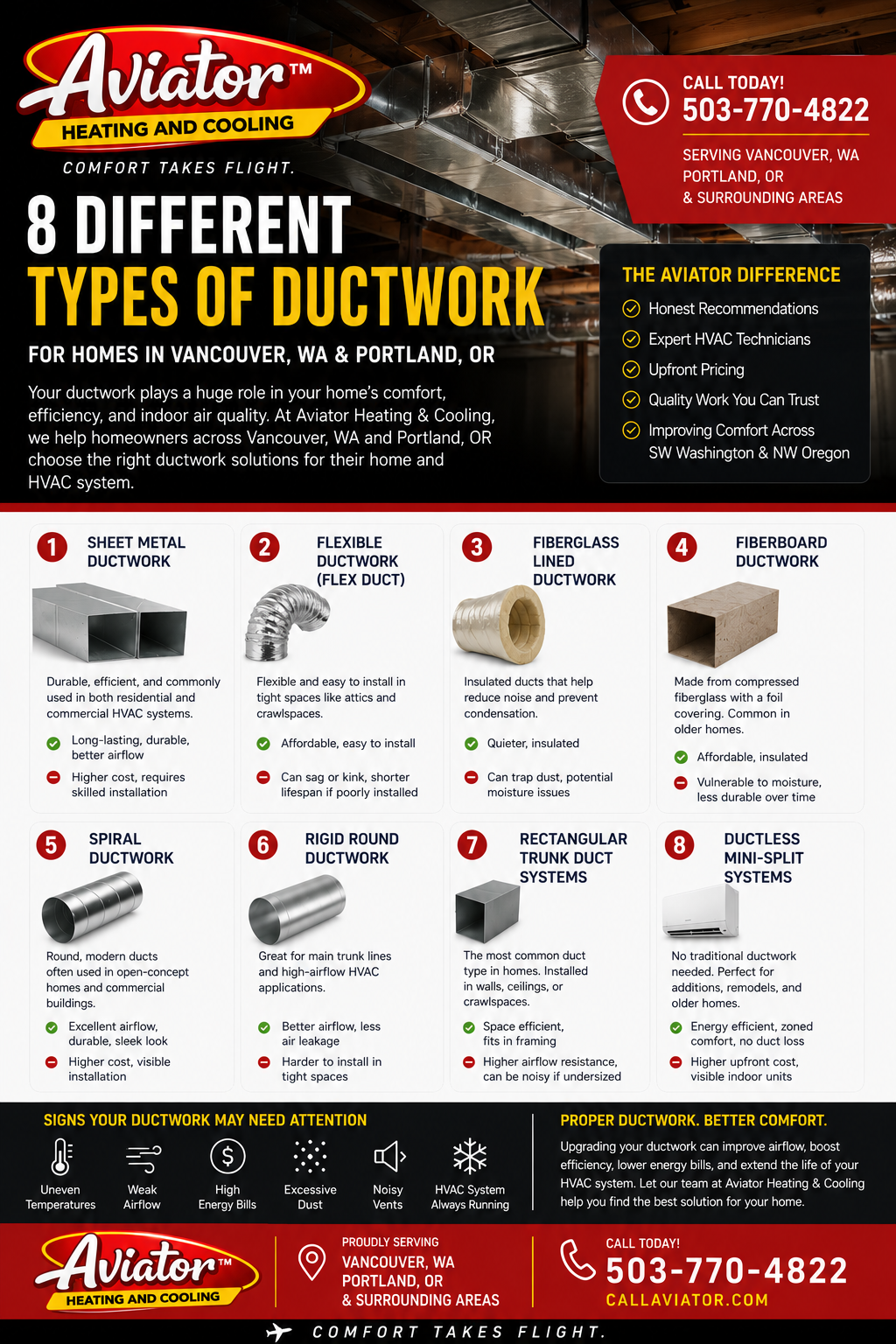
When homeowners in Vancouver and Portland think about heating and cooling systems, they often focus on the furnace, heat pump, or air conditioner itself. However, one of the most important parts of the HVAC system is the ductwork hidden behind walls, ceilings, crawlspaces, and attics.
Your ductwork is responsible for delivering conditioned air throughout your home. Poorly designed ducts can reduce comfort, waste energy, create airflow imbalance, increase dust, and shorten the lifespan of your HVAC equipment. At Aviator Heating & Cooling, we regularly inspect, repair, replace, and redesign duct systems throughout the Pacific Northwest. Homes in Portland and Vancouver face unique challenges because of our damp winters, seasonal temperature swings, older home construction, and growing popularity of high-efficiency HVAC systems.
In this guide, we'll explain 8 different types of ductwork commonly found in homes throughout Vancouver, WA and Portland, OR, along with the advantages and disadvantages of each.
The climate in the Pacific Northwest creates unique HVAC challenges. Many homes in Portland and Vancouver were built decades ago with undersized duct systems designed for older furnaces, not modern high-efficiency heat pumps or variable-speed systems.
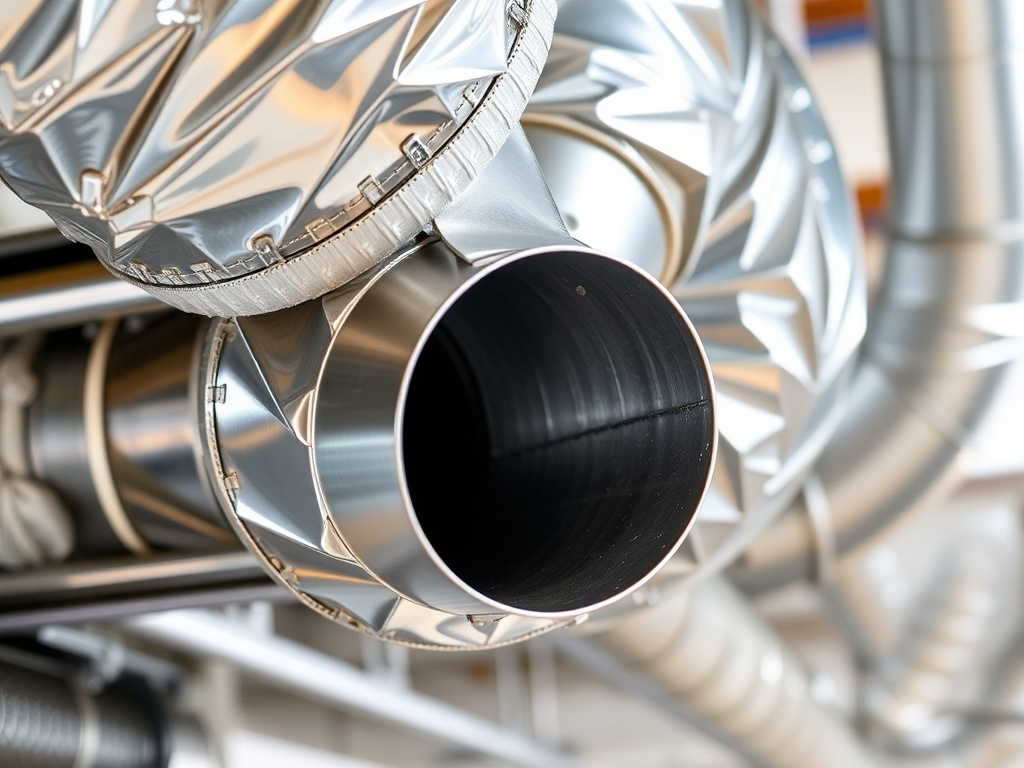
Sheet metal ductwork is one of the most durable and professional HVAC duct systems available. These ducts are typically made from galvanized steel or aluminum and are extremely common in commercial buildings but are also used in higher-quality residential installations throughout Portland and Vancouver.
For homeowners investing in premium HVAC systems, sheet metal ductwork is often the best long-term solution.
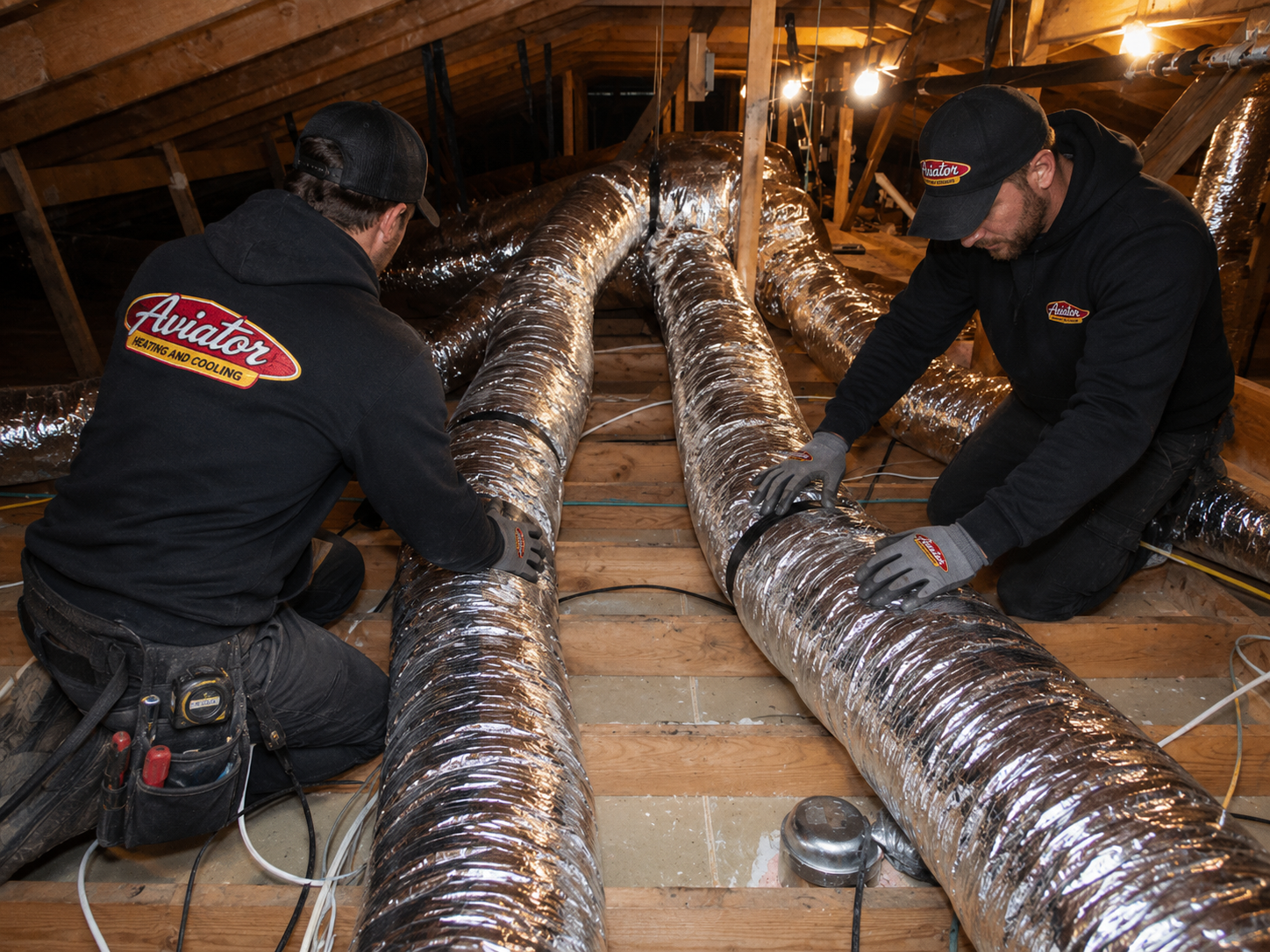
Flex duct is one of the most common types of residential ductwork found in homes across Vancouver, WA. It consists of a flexible inner liner, wire coil structure, and outer insulation jacket. Builders often use flex duct because it is inexpensive and easy to install.
Improperly installed flex duct is one of the biggest airflow problems we encounter in older Pacific Northwest homes.
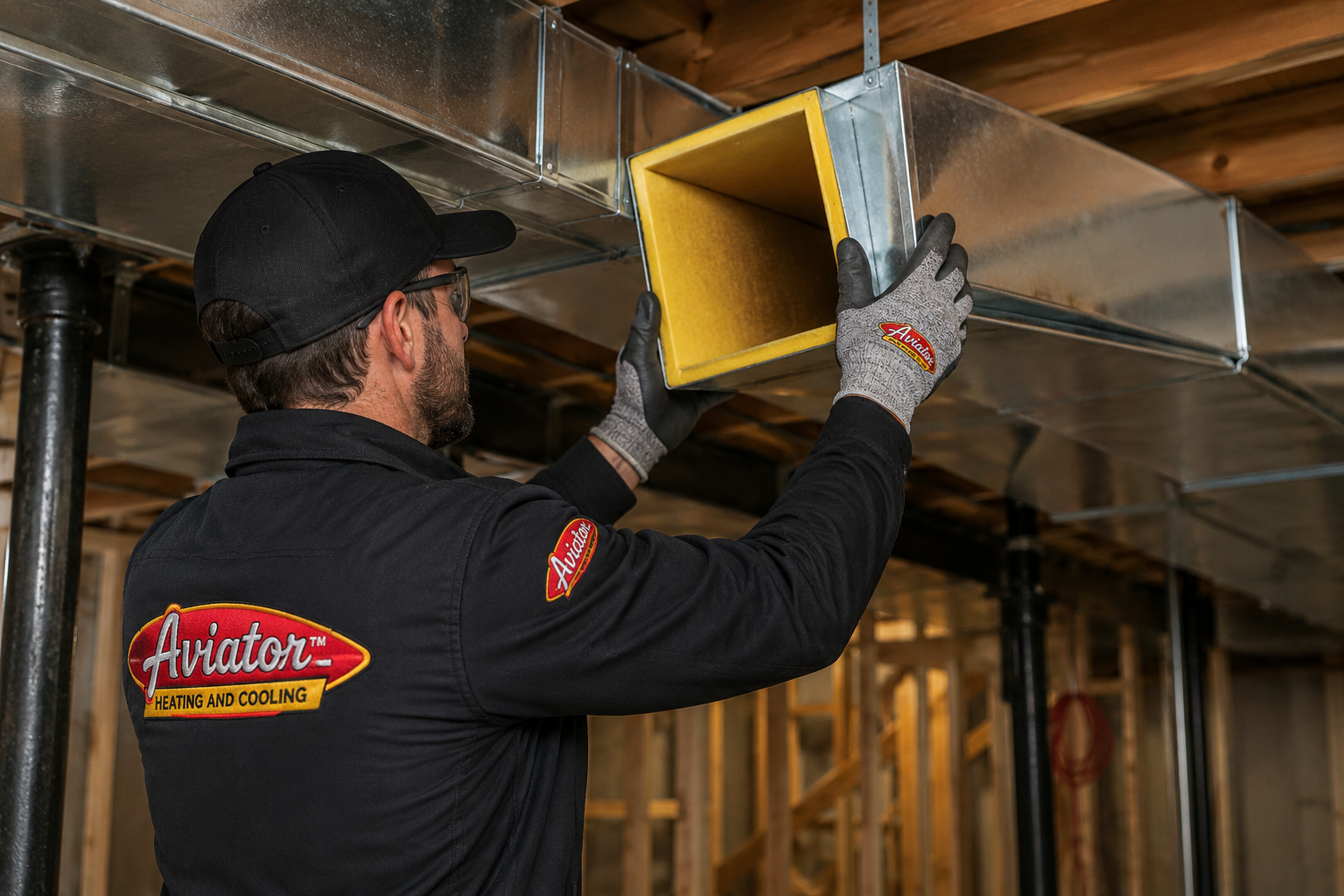
Fiberglass-lined ducts contain internal insulation designed to reduce noise, prevent condensation, and improve efficiency. This type of ductwork became popular because it helped reduce HVAC sound transmission.
In damp climates like Portland and Vancouver, moisture management is extremely important when dealing with fiberglass duct systems.
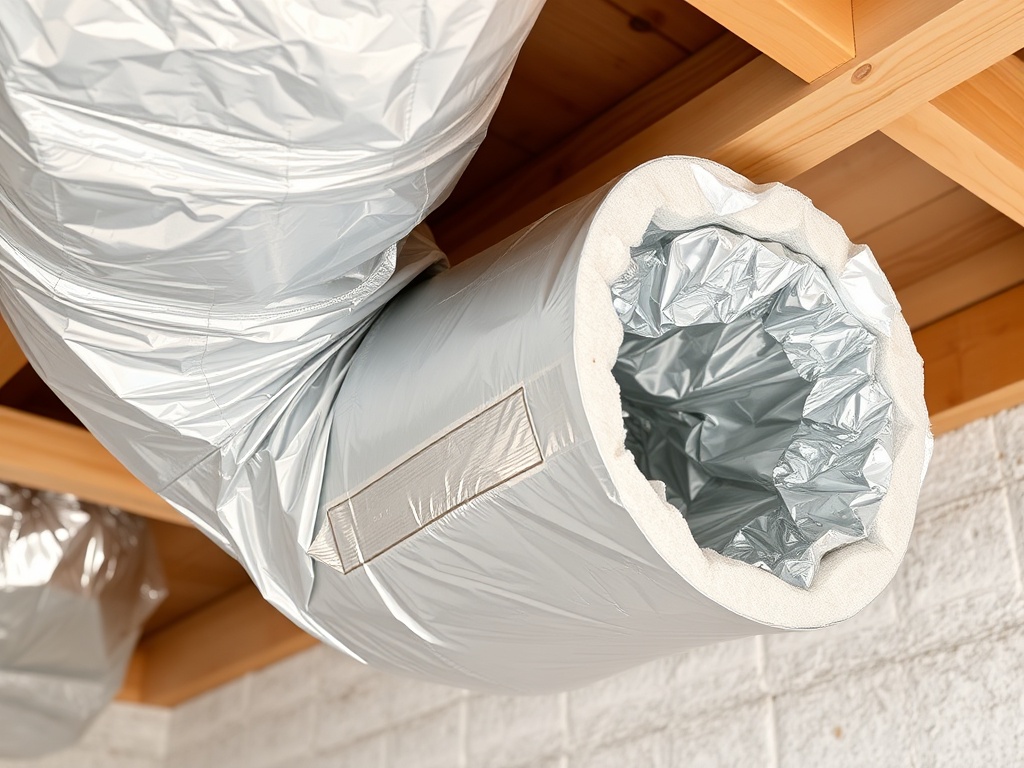
Fiberboard ducts are made from compressed fiberglass sheets with foil exterior coverings. These systems were commonly installed in certain residential developments because they were lightweight and inexpensive.
Many older homes in the Portland metro area still contain aging fiberboard duct systems that may need replacement.
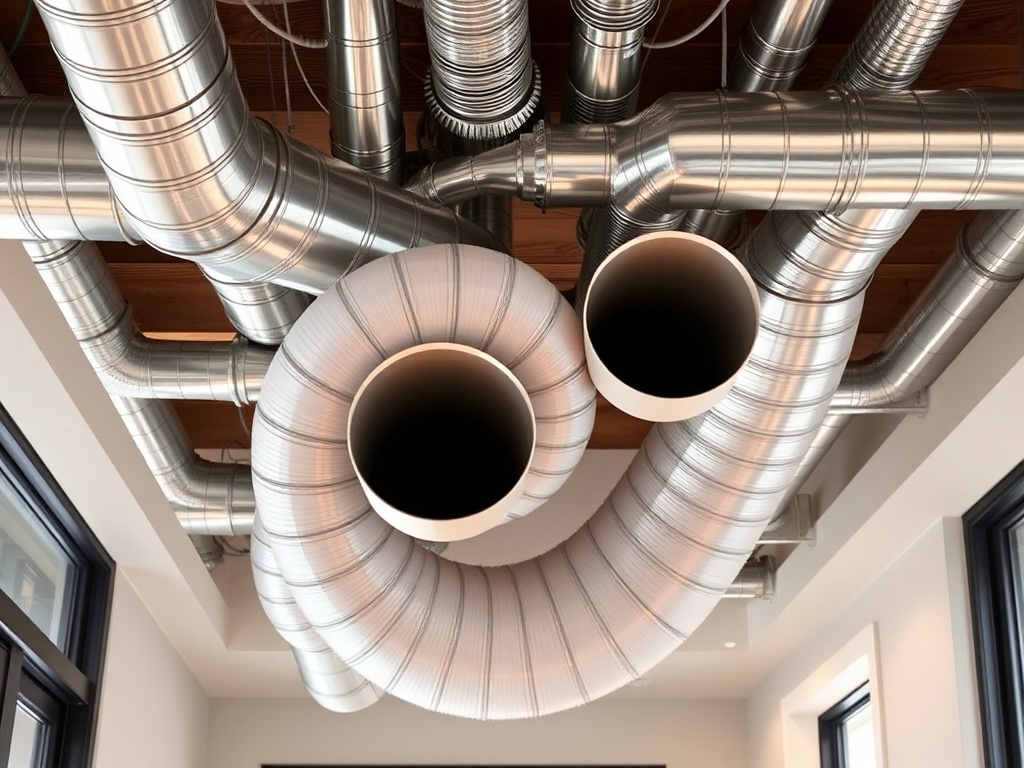
Spiral ductwork is commonly seen in modern industrial-style homes and commercial spaces. These exposed round ducts have become increasingly popular in luxury remodels and custom homes throughout Portland.
Spiral ducts are often paired with modern heat pump systems and open-concept floor plans.
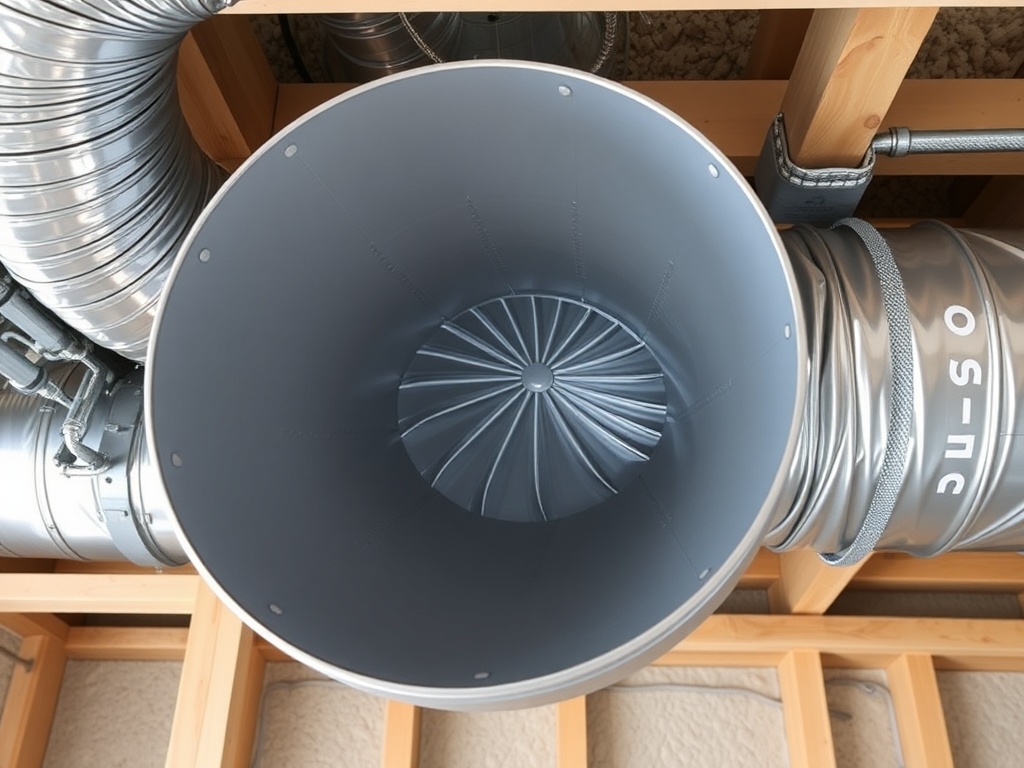
Rigid round ducts are commonly used for main trunk lines, exhaust systems, and high-airflow applications. Because round ducts reduce airflow resistance, they can improve HVAC efficiency.
High-efficiency HVAC systems often benefit from larger round return ducts to improve airflow.
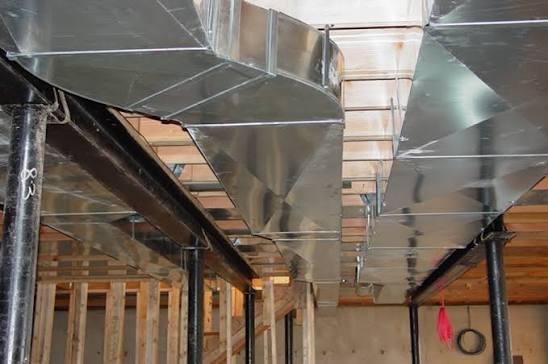
Rectangular duct systems are extremely common in residential homes. These ducts are often fabricated from sheet metal and installed inside ceilings, walls, basements, and crawlspaces.
Many homes in Vancouver and Portland experience airflow issues because the original rectangular duct trunks were undersized for upgraded HVAC equipment.
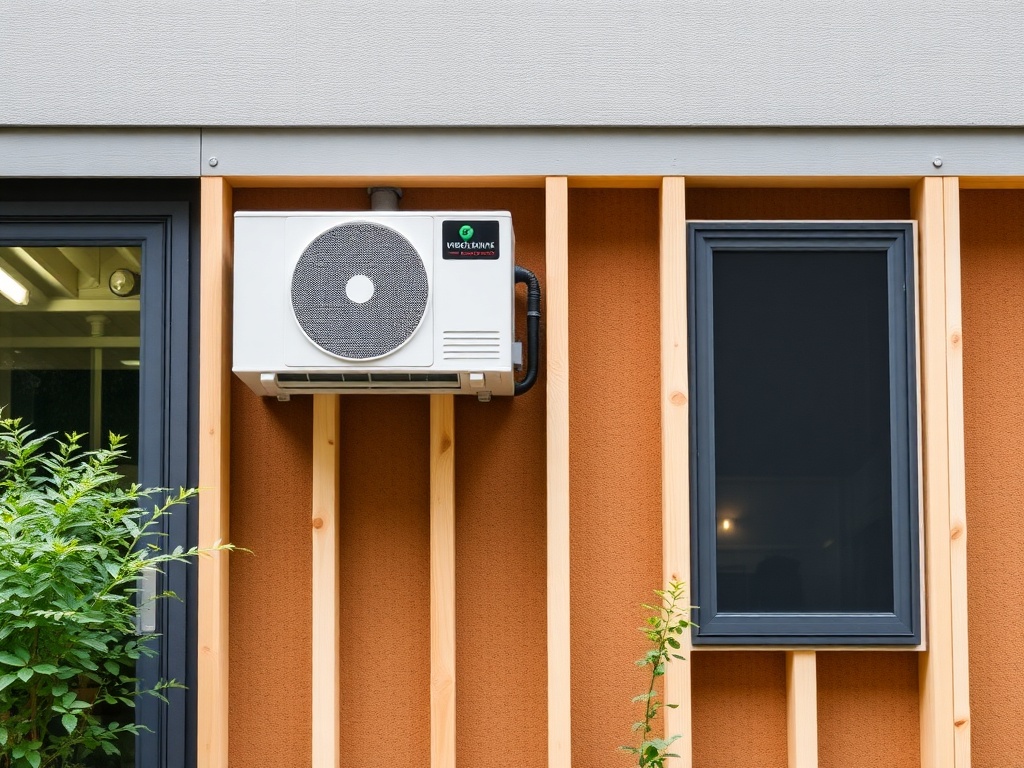
While technically not ductwork, ductless mini-splits are increasingly popular throughout Portland and Vancouver because many homes lack adequate ducts. Mini-splits use refrigerant lines, indoor wall units, and no central duct system.
Ductless systems are especially common in older Portland homes, ADUs, remodels, converted garages, and homes without existing ducts.
The best ductwork depends on several factors:
Many homes have insufficient return airflow, causing:
Air leakage wastes conditioned air and increases utility bills significantly.
Some rooms become too hot or too cold, creating uncomfortable living conditions.
Crawlspace and attic moisture can damage ducts over time, and dust accumulation reduces airflow and indoor air quality.
You may need duct upgrades if you notice:
Hot and cold spots throughout your home
Poor air delivery from vents
Increased energy costs
Visible dust accumulation
Loud rattling or whistling sounds
HVAC never shuts off
Many homeowners upgrade equipment without upgrading ducts, which can severely reduce system performance.
Modern heat pumps require proper airflow to operate correctly. Many older duct systems in Portland and Vancouver were designed for older furnaces with different airflow requirements.
In many cases, yes. If your ductwork is undersized, damaged, leaking, poorly designed, contaminated, or over 20–30 years old, it may limit the performance of your new HVAC system.
Replacing or modifying ductwork during installation is often much easier and more cost-effective than waiting until later.
Proper duct design is one of the most overlooked parts of HVAC installation. At Aviator Heating & Cooling, we help homeowners throughout Vancouver, WA and Portland, OR improve airflow, comfort, and HVAC efficiency through professional duct inspections, airflow analysis, duct modifications, and full duct system replacements.
Our team can help evaluate the best solution for your home.
Even the most expensive heat pump or furnace cannot perform correctly with poor airflow or failing ducts. For homeowners in Vancouver, WA and Portland, OR, choosing the right type of ductwork can improve comfort, energy efficiency, indoor air quality, HVAC reliability, and long-term operating costs.
If your home suffers from weak airflow, uneven temperatures, or aging ducts, it may be time for a professional ductwork evaluation.
Serving Vancouver, WA • Portland, OR • Beaverton • Hillsboro • Tigard • Lake Oswego • Gresham
Add us to your Preferred Sources in Google News