Understanding Heat Exchanger Types and Why They Matter
A cracked heat exchanger is one of the most serious issues your furnace can develop. In the Beaverton, Tigard, Portland, Gresham, and surrounding areas, this problem accounts for countless emergency heating calls every winter. Understanding the difference between heat exchanger types can help you prevent costly failures and make informed replacement decisions.
The Two Main Heat Exchanger Designs
Most furnaces use one of two heat exchanger designs. The critical difference between them determines how prone they are to cracking and how long they'll last in your home.
Understanding the Two Heat Exchanger Designs
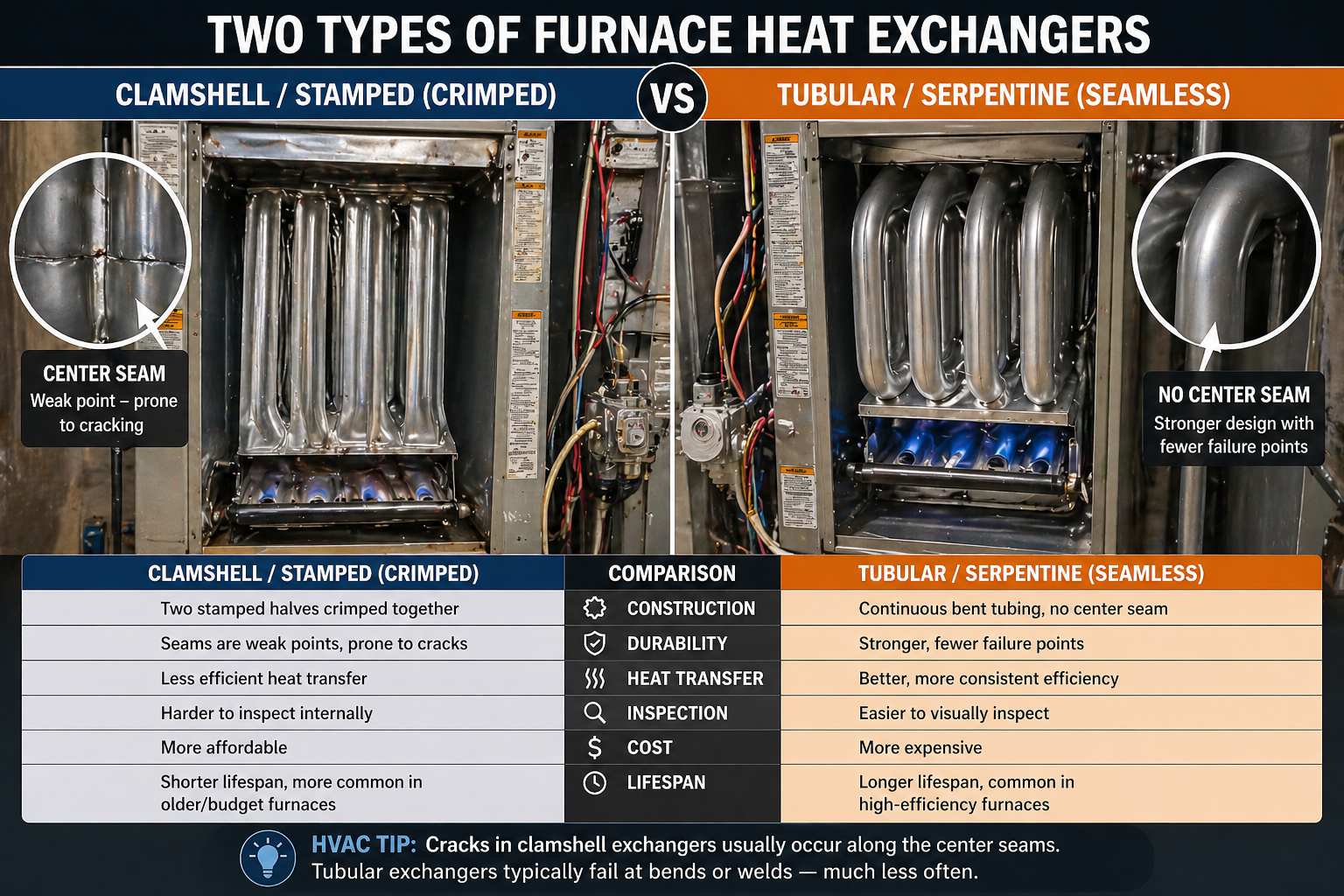
There are two main types of heat exchangers found in residential furnaces: stamped (clamshell) and tubular (serpentine) designs. The type your furnace uses significantly impacts its durability and susceptibility to cracking.
Clamshell/Stamped (Crimped) Heat Exchanger
Made from two stamped halves that are pressed and crimped together, these exchangers feature a center seam running down the middle of each cell. While cheaper to manufacture and lightweight, stamped heat exchangers have a critical weakness: the seams are prone to cracking over time. They're more common in older or budget furnaces and harder to inspect internally, with a typical lifespan of 10-15 years.
Tubular/Serpentine Heat Exchanger
Made from continuous bent tubing with no center seam, tubular heat exchangers feature a smooth, rounded "loop" design, typically made from aluminized or stainless steel. These are significantly stronger with fewer failure points, offer better heat transfer consistency, are easier to inspect, and provide superior long-term durability. While more expensive to manufacture, they typically last 15-20+ years, making them the preferred upgrade choice.
Signs of a Cracked Heat Exchanger
A cracked heat exchanger is serious because it can allow combustion gases (including carbon monoxide) to mix with your home's air. Watch for these warning signs:
- Yellow or orange pilot light: Should always be blue; other colors indicate combustion problems
- Excessive rust or corrosion: Visible deterioration on the heat exchanger surface
- Furnace shuts down during operation: Many furnaces have a crack detector that stops the unit if carbon monoxide is detected
- Strange burning smell: Not the normal dusty smell at startup, but a chemical or metallic odor
- Soot around the furnace: Black dust accumulation indicates combustion problems
- Family members experiencing symptoms: Headaches, dizziness, nausea during furnace operation
Why Replacement Is Often the Only Safe Option
Unlike some furnace repairs, a cracked heat exchanger cannot be safely patched or welded. Here's why:
- Safety risk: Patches can fail, exposing your family to dangerous carbon monoxide
- Warranty void: Repairs violate furnace manufacturer warranties
- Code compliance: Professional inspection and certification require replacement
- Long-term cost: A repaired unit risks failure during cold months when you need heat most
Making the Smart Choice: Stamped vs. Tubular Replacement
When your heat exchanger fails, you face a choice that will impact your comfort and budget for years to come. If your old furnace used a stamped heat exchanger, upgrading to a tubular design means:
- Less frequent repairs: Fewer callbacks and emergency service visits
- Better long-term value: Higher upfront cost pays for itself through durability
- Greater peace of mind: Tubular designs are significantly more reliable
- Energy efficiency: Newer furnaces with tubular heat exchangers run more efficiently, lowering your heating bills
Cracked Heat Exchanger Repair & Replacement in Your Area
Whether you're in Beaverton, Tigard, Portland, Gresham, or nearby areas, a cracked heat exchanger requires immediate professional attention. Our certified HVAC technicians:
- Perform thorough heat exchanger inspections with visual and combustion analysis
- Explain your replacement options and financing plans
- Install high-quality furnaces with durable tubular heat exchangers
- Ensure all systems are properly vented and safely operating
- Provide emergency service 24/7 when you need it most
Concerned About Your Heat Exchanger?
Don't risk your family's safety. Get a professional inspection today to identify any cracking or corrosion before it becomes dangerous. We offer honest assessments and flexible financing options.